Small shop operations
Reducing Sheet-Good Waste In A Small Woodworking Shop
How small teams can get professional material control without a full production engineering department.
Research Lens
How can a small shop build a material-control system without enterprise software?
Small shops gain leverage from standard material naming, reusable stock libraries, offcut labeling, and project-type baselines. The operating system matters as much as the optimizer.
Decision Metrics
Standardize The Sheet Library
Keep common stock sizes, thicknesses, and material names consistent. A small shop loses time when the same plywood appears under three names or when every job starts from a blank stock list.
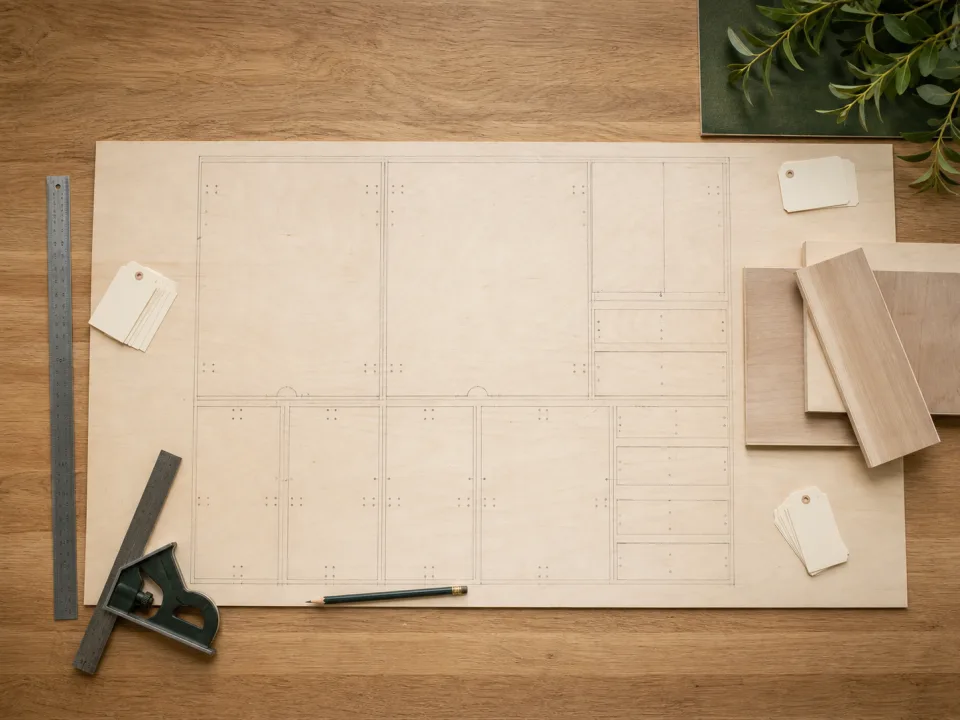
Batch Similar Projects
If two jobs use the same material, batch planning can reveal better layouts than optimizing each project in isolation. This is especially useful for shelves, drawer parts, and utility panels.
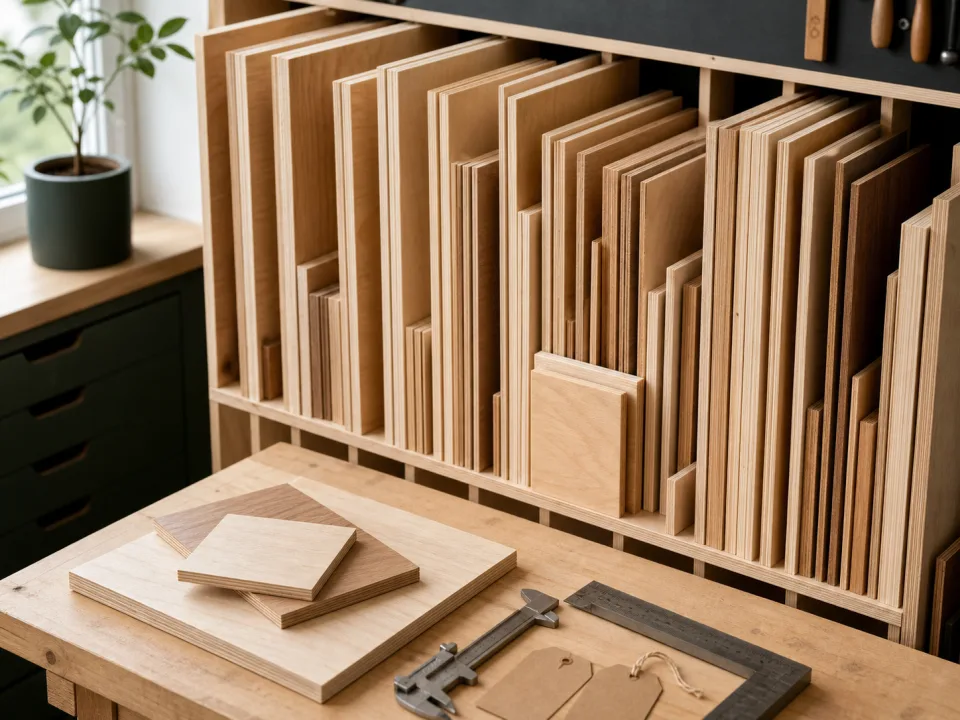
Make Offcuts Searchable
Saved scraps only matter when people can find them. Label material, thickness, size, and date. A simple offcut shelf with visible dimensions can reduce new sheet purchases.
Keep A Waste Baseline
Track expected waste per project type. Cabinet boxes, closets, built-ins, and one-off furniture all behave differently. Baselines help the shop notice when a layout is unusually expensive.
Field Checklist
- Use consistent material names.
- Batch projects using the same stock.
- Label usable offcuts.
- Track waste by job type.
Project Application
A small shop builds mudroom benches, closet inserts, and shop cabinets from the same 3/4 inch plywood. Without a shared stock library, every project starts with slightly different material names and offcuts are hard to reuse.
Saving one usable 18 x 30 inch offcut is 540 square inches, or about 7.8% of a 4 x 8 sheet. Labeling three similar offcuts can prevent buying an extra project panel later.
The common mistake is treating every leftover piece as useful. Thin strips without labels usually become clutter instead of inventory.
Use CutList to keep local project records and compare planned waste against real shop scraps after the job is cut.