Stairs comparison
Open Riser vs Closed Riser Stairs
Compare open-riser and closed-riser stairs for safety, appearance, cleaning, code, material, and layout planning.
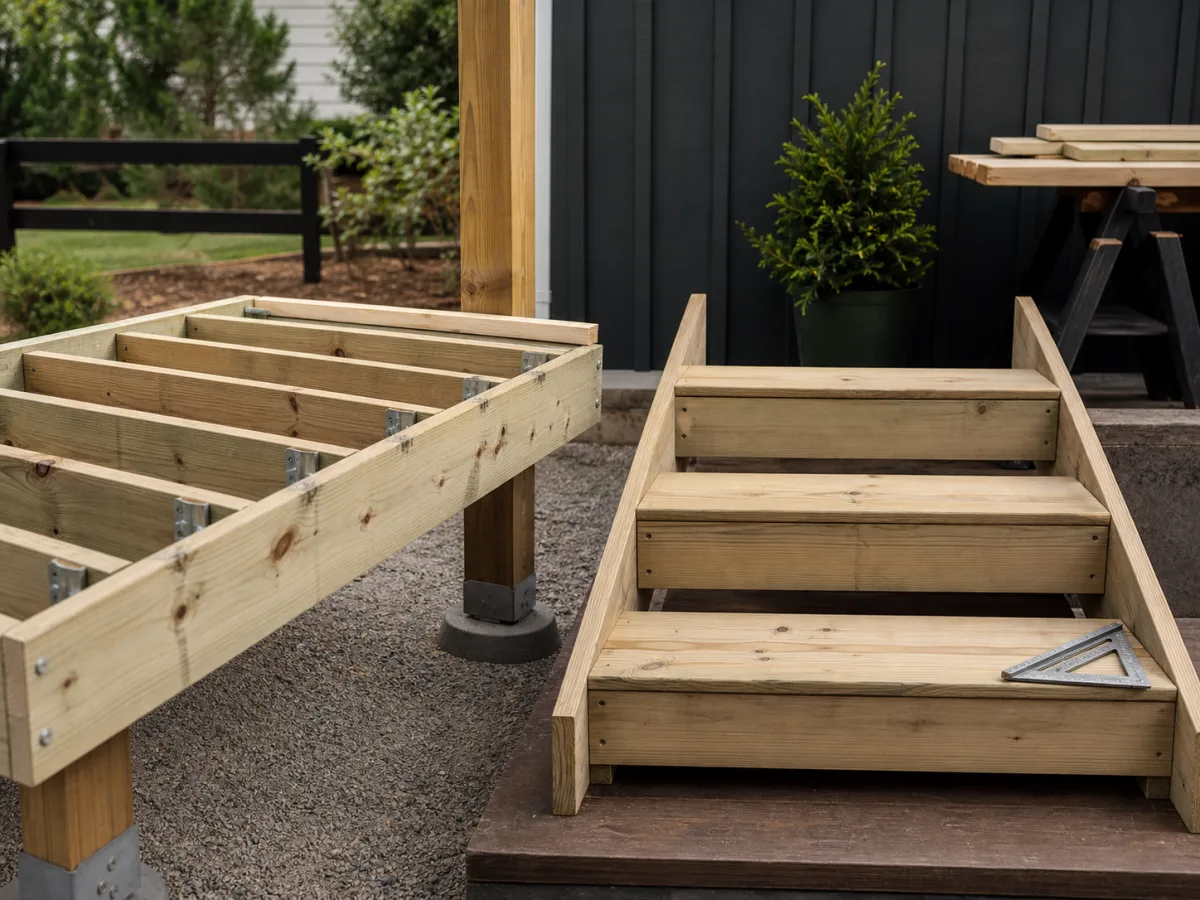
Verdict
Quick answer
Use closed risers for most family, utility, and code-sensitive stairs. Use open risers only when the design, local rules, and user safety all support the open look.
Ratings
Strength, durability, moisture, and workability.
Side by side
Comparison table
| Factor | Open riser stairs | Closed riser stairs |
|---|---|---|
| Appearance | Light and open | Solid and traditional |
| Safety | Needs careful code review | Usually more forgiving |
| Cleaning | Dust falls through | Easier to contain |
| Material | No riser boards | Needs riser material |
| Best fit | Design feature | Everyday stair |
Key differences
What changes in the real project?
Open riser stairs vs Closed riser stairs
Open riser stairs: Light and open
Closed riser stairs: Solid and traditional
Open riser stairs vs Closed riser stairs
Open riser stairs: Needs careful code review
Closed riser stairs: Usually more forgiving
Open riser stairs vs Closed riser stairs
Open riser stairs: Dust falls through
Closed riser stairs: Easier to contain
Open riser stairs vs Closed riser stairs
Open riser stairs: No riser boards
Closed riser stairs: Needs riser material
Pros and cons
Tradeoffs by option.
Open riser stairs pros
- Best fit for modern visual openness and light through the stair
- Appearance: Light and open
- Safety: Needs careful code review
- Cleaning: Dust falls through
- Clear choice when the project is designed around Open riser stairs.
Open riser stairs cons
- Can be the wrong choice when the job is closer to safer family use, storage below, and traditional stair construction.
- Requires checking real stock, tool setup, installation conditions, and finish expectations.
- May cost more in rework if chosen only because Open riser stairs is familiar.
- Compare against Closed riser stairs with the actual measurements before buying.
Closed riser stairs pros
- Best fit for safer family use, storage below, and traditional stair construction
- Appearance: Solid and traditional
- Safety: Usually more forgiving
- Cleaning: Easier to contain
- Clear choice when the project is designed around Closed riser stairs.
Closed riser stairs cons
- Can be the wrong choice when the job is closer to modern visual openness and light through the stair.
- Requires checking real stock, tool setup, installation conditions, and finish expectations.
- May cost more in rework if chosen only because Closed riser stairs is familiar.
- Compare against Open riser stairs with the actual measurements before buying.
Pricing
Cost comparison
Open riser stairs
Compare local material, blade, fastener, or labor cost before buying.
Closed riser stairs
Compare local material, blade, fastener, or labor cost before buying.
Applications
Common applications
Use Open riser stairs for
modern visual openness and light through the stair.
Use Closed riser stairs for
safer family use, storage below, and traditional stair construction.
Maintenance
Maintenance and long-term fit
Do not compare only sticker price or the first setup step. Compare the whole workflow: measuring, buying, cutting, installing, finishing, revising, maintaining, and repairing the result. A cheaper or faster option can still lose if it creates more waste, harder cuts, weaker fastening, worse appearance, or more rework after the first mistake.
Plan the work after choosing
Once you choose between Open riser stairs and Closed riser stairs, run your own numbers. WoodCutTool calculators and apps help turn the comparison into a cut list, sheet count, material estimate, or project record before you buy or cut.
Internal links
Related calculators and articles
Compare next
More stairs decisions
FAQ
Common questions
Which is better: Open riser stairs or Closed riser stairs?
Use closed risers for most family, utility, and code-sensitive stairs. Use open risers only when the design, local rules, and user safety all support the open look.
When should I choose Open riser stairs?
Choose Open riser stairs for modern visual openness and light through the stair.
When should I choose Closed riser stairs?
Choose Closed riser stairs for safer family use, storage below, and traditional stair construction.
What should I compare before buying?
Compare the real project constraints: material, tool access, installation conditions, finish quality, waste, cost, and the ability to revise the plan before work starts.
Which WoodCutTool page should I use next?
Use the linked calculator, template, app, or learn guide on this page to test the decision with your own measurements instead of relying on a generic rule.