Materials
Plywood Paint Grade vs Stain Grade: Which to Buy
Paint-grade vs stain-grade plywood: face quality, species, cost, and finish. Choose the right plywood depending on whether you will paint or stain.
Research Lens
How can a personal builder use CutList to finish plywood paint grade vs stain grade: which to buy with fewer mistakes?
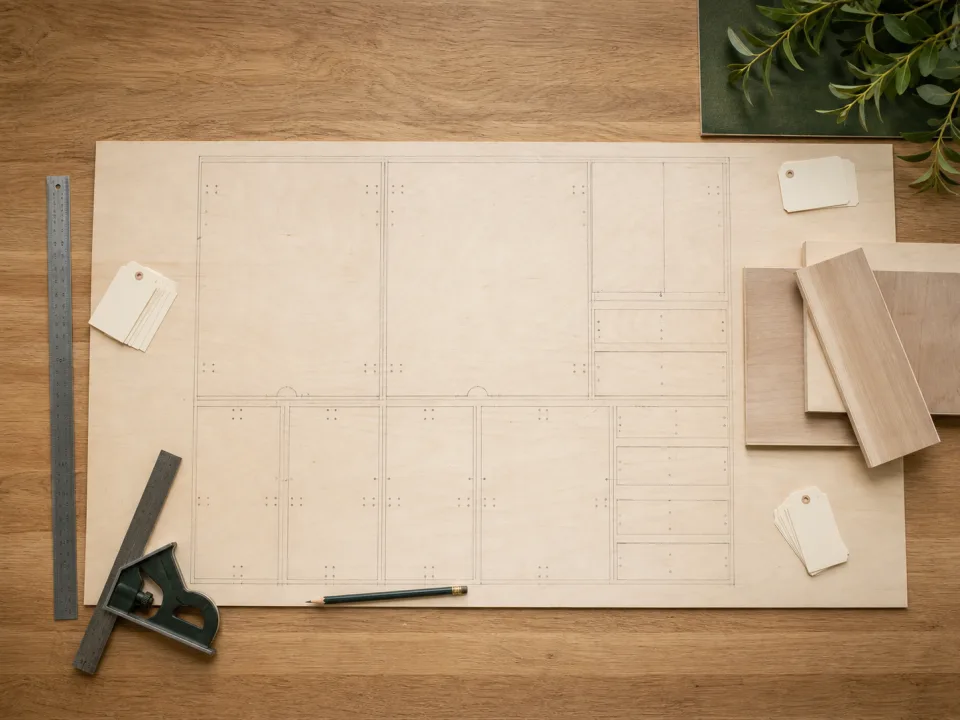
The hobby workflow is strongest when the app is used as a planning checkpoint: define the project, enter accurate stock and parts, generate a visual layout, then use cost, waste, grain, kerf, PDF export, project history, and offline access to control the real cutting session.
Decision Metrics
Finish Decides the Grade
Whether you plan to paint or stain a project should decide which plywood you buy. Paint hides the surface, so a cheaper face works; stain and clear finishes show every detail, so the face species and quality matter. Buying the wrong one means either wasted money or a disappointing finish.
Paint-Grade Plywood
Paint-grade plywood has a smooth, paintable face but the species and grain are not important since paint covers them. Birch or a smooth utility face is common. It is cheaper than premium stain-grade and ideal for painted cabinets, shaker panels, and anything getting an opaque finish.
Stain-Grade Plywood
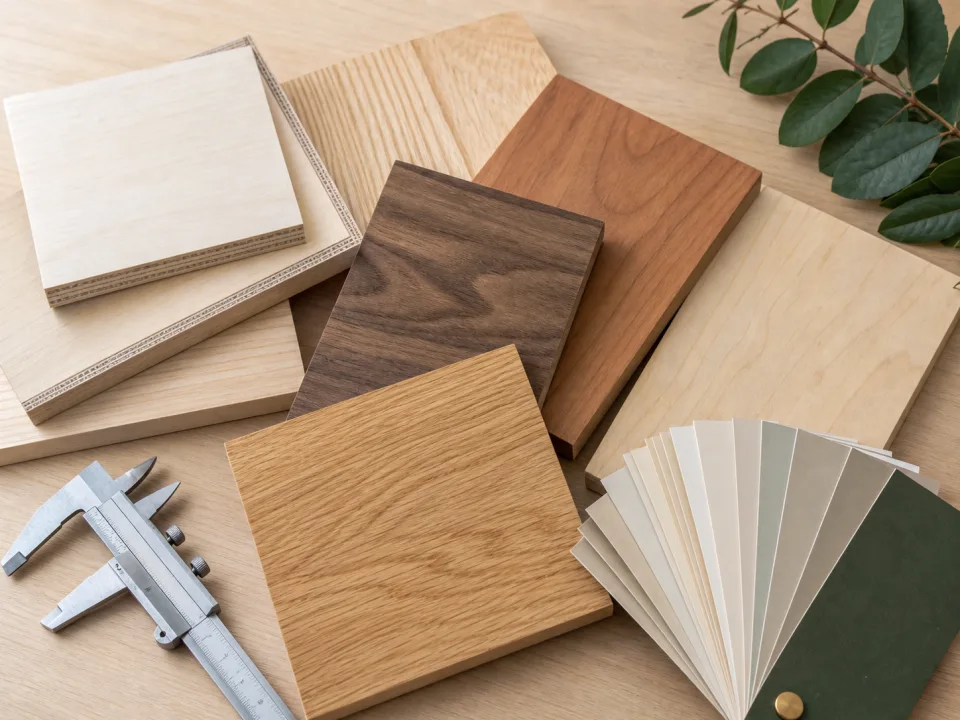
Stain-grade (or veneer-grade) plywood has an attractive face veneer of a specific species, oak, maple, walnut, chosen for its grain and color under a clear or stained finish. It costs more and demands careful handling to avoid scratches, but it is what gives plywood furniture a real-wood look.
Matching Species and Grain
For stain-grade work, the face species must match your design (oak for oak furniture) and ideally the grain should be considered across adjacent parts. Paint-grade frees you from species matching. This is why deciding paint vs stain first simplifies the whole material choice.
Cost and the Cut List
Stain-grade plywood costs more, so you may use it only for visible parts and a cheaper paint-grade or utility sheet for hidden structure. Plan the cut list so stain-grade sheets go to visible faces and cheaper sheets to interiors, balancing finish quality and budget.
Compare
Paint-grade vs stain-grade
| Factor | Paint-grade | Stain-grade | Edge |
|---|---|---|---|
| Face quality | Smooth, paintable | Attractive veneer | Depends |
| Species matters | No | Yes | Stain-grade |
| Cost | Lower | Higher | Paint-grade |
| Best finish | Paint | Stain/clear | Depends |
Field Checklist
- Decide paint or stain before buying plywood.
- Use paint-grade for opaque, painted finishes.
- Use stain-grade for clear or stained finishes.
- Match the face species for stain-grade work.
- Reserve stain-grade for visible parts to save cost.
FAQ
Common questions
What is the difference between paint-grade and stain-grade plywood?
Paint-grade has a smooth paintable face where species does not matter; stain-grade has an attractive veneer of a specific species for clear or stained finishes.
Which plywood should I buy if I'm painting?
Paint-grade plywood. It has a smooth, paintable face at lower cost, since paint hides the species and grain.
Which plywood for a stained finish?
Stain-grade (veneer-grade) plywood in the species you want, since a clear or stained finish shows the face grain and color.
Is stain-grade plywood worth the extra cost?
For visible parts getting a clear finish, yes. For painted or hidden parts, paint-grade or utility plywood saves money with no visible difference.
Can I mix paint-grade and stain-grade in a project?
Yes. Use stain-grade for visible faces and cheaper paint-grade or utility sheets for hidden structure to balance quality and budget.
Sources