Production workflow
CutList Shop Workflow: From Bid to First Cut
How cabinet shops turn a rough scope into a cut-ready sheet plan without losing time between estimating, layout, and production.

Research Lens
Where does material waste enter the cabinet workflow before anyone reaches the saw?
Most waste is created upstream: ambiguous estimating assumptions, mixed material groups, and unreviewed sheet layouts. The optimizer is most valuable when it sits between estimating and production as a verification layer.
Decision Metrics
Start With The Bid Assumptions
A useful cut list begins before the shop opens a sheet. Pull cabinet counts, exposed finished ends, drawer box quantities, and any odd depth changes out of the estimate first. Those assumptions decide whether the optimizer is solving the real job or a simplified version of it.
Separate Parts By Material Behavior
Melamine, prefinished plywood, veneer plywood, and shop-grade backing should not be treated as one pool. Each material has different face quality, grain rules, chipout risk, and offcut value. Splitting them early keeps the resulting layout practical on the saw.
Use Optimization As A Review Step
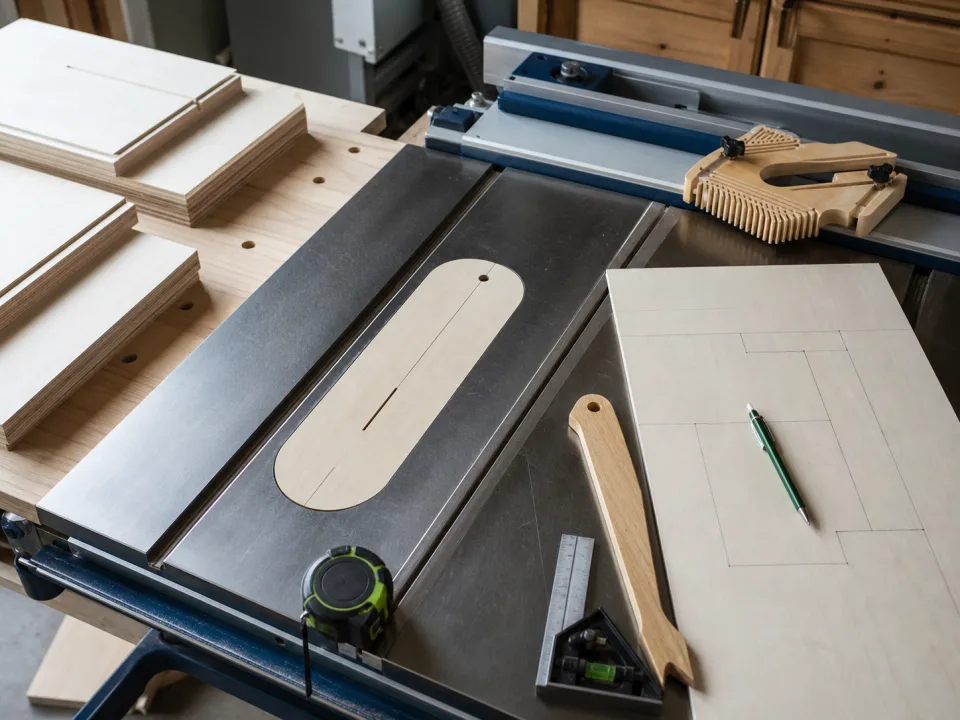
The best shops do not accept the first layout blindly. They inspect sheet count, narrow strips, repeated rip settings, and offcuts that are large enough to keep. CutList planning works best when it becomes a review station between estimating and production.
Close The Loop After Cutting
When the job is finished, compare expected waste with actual scraps. Patterns show up quickly: oversized filler allowances, duplicated panels, or parts that should be batched differently. That feedback turns the next cut list into a better estimate.
Field Checklist
- Lock finished dimensions before optimizing.
- Mark material groups before sheet layout.
- Review offcuts that are worth labeling.
- Compare planned waste with real scrap.
Project Application
A two-person cabinet shop is quoting a laundry room with four base cabinets, six adjustable shelves, two finished end panels, and drawer boxes. Before a sheet is opened, the estimator needs to know whether prefinished plywood and shop-grade backs should be purchased together or separated into different material groups.
If the visible cabinet parts use three 4 x 8 sheets at roughly 78% yield and backs use one cheaper sheet at 62% yield, mixing the groups hides the real cost. Running them separately in CutList makes the buying decision clearer and keeps offcuts matched to material quality.
The common mistake is sending the first spreadsheet total straight to the saw. It usually misses finished ends, duplicate left/right parts, or the extra trim cut needed to square factory edges.
Use the online plywood calculator for a quick sheet count, then move the approved job into CutList for iPhone when the shop needs saved local projects and PDF output.