Material comparison
Plywood vs OSB: Which Sheet Good Should You Use
Compare plywood and OSB for cabinets, sheathing, shop projects, moisture, screw holding, edges, and finish quality.
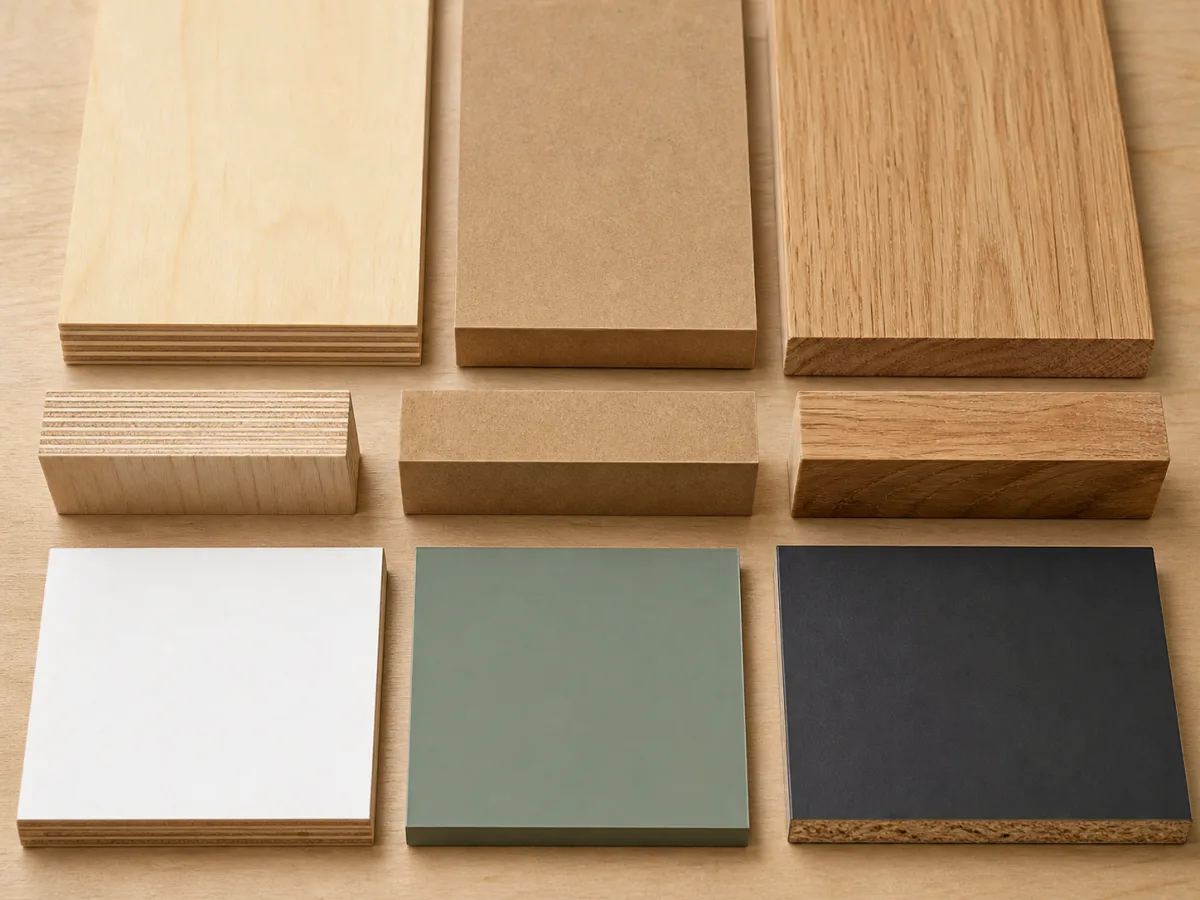
Verdict
Quick answer
Use plywood for furniture, cabinets, exposed edges, and projects where screw holding and finish quality matter. Use OSB for hidden structural sheathing and utility surfaces where price matters more than appearance.
Ratings
Strength, durability, moisture, and workability.
Side by side
Comparison table
| Factor | Plywood | OSB |
|---|---|---|
| Face quality | Smoother and easier to finish | Rough strand texture; usually hidden |
| Edge behavior | Cleaner edges and better screw holding | Edges can swell and look rough |
| Moisture tolerance | Generally more forgiving if briefly wet | Can swell at edges if exposed |
| Cost | Usually higher | Usually lower |
| Best role | Finished or semi-finished projects | Hidden structural panels |
Key differences
What changes in the real project?
Plywood vs OSB
Plywood: Smoother and easier to finish
OSB: Rough strand texture; usually hidden
Plywood vs OSB
Plywood: Cleaner edges and better screw holding
OSB: Edges can swell and look rough
Plywood vs OSB
Plywood: Generally more forgiving if briefly wet
OSB: Can swell at edges if exposed
Plywood vs OSB
Plywood: Usually higher
OSB: Usually lower
Pros and cons
Tradeoffs by option.
Plywood pros
- Best fit for visible shop furniture, cabinet parts, damp areas, and edge fastening
- Face quality: Smoother and easier to finish
- Edge behavior: Cleaner edges and better screw holding
- Moisture tolerance: Generally more forgiving if briefly wet
- Clear choice when the project is designed around Plywood.
Plywood cons
- Can be the wrong choice when the job is closer to hidden wall sheathing, roof decking, subfloors, and rough utility builds.
- Requires checking real stock, tool setup, installation conditions, and finish expectations.
- May cost more in rework if chosen only because Plywood is familiar.
- Compare against OSB with the actual measurements before buying.
OSB pros
- Best fit for hidden wall sheathing, roof decking, subfloors, and rough utility builds
- Face quality: Rough strand texture; usually hidden
- Edge behavior: Edges can swell and look rough
- Moisture tolerance: Can swell at edges if exposed
- Clear choice when the project is designed around OSB.
OSB cons
- Can be the wrong choice when the job is closer to visible shop furniture, cabinet parts, damp areas, and edge fastening.
- Requires checking real stock, tool setup, installation conditions, and finish expectations.
- May cost more in rework if chosen only because OSB is familiar.
- Compare against Plywood with the actual measurements before buying.
Pricing
Cost comparison
Plywood
Usually higher
OSB
Usually lower
Applications
Common applications
Use Plywood for
visible shop furniture, cabinet parts, damp areas, and edge fastening.
Use OSB for
hidden wall sheathing, roof decking, subfloors, and rough utility builds.
Maintenance
Maintenance and long-term fit
Do not compare only sticker price or the first setup step. Compare the whole workflow: measuring, buying, cutting, installing, finishing, revising, maintaining, and repairing the result. A cheaper or faster option can still lose if it creates more waste, harder cuts, weaker fastening, worse appearance, or more rework after the first mistake.
Plan the work after choosing
Once you choose between Plywood and OSB, run your own numbers. WoodCutTool calculators and apps help turn the comparison into a cut list, sheet count, material estimate, or project record before you buy or cut.
Internal links
Related calculators and articles
Compare next
More material decisions
FAQ
Common questions
Which is better: Plywood or OSB?
Use plywood for furniture, cabinets, exposed edges, and projects where screw holding and finish quality matter. Use OSB for hidden structural sheathing and utility surfaces where price matters more than appearance.
When should I choose Plywood?
Choose Plywood for visible shop furniture, cabinet parts, damp areas, and edge fastening.
When should I choose OSB?
Choose OSB for hidden wall sheathing, roof decking, subfloors, and rough utility builds.
What should I compare before buying?
Compare the real project constraints: material, tool access, installation conditions, finish quality, waste, cost, and the ability to revise the plan before work starts.
Which WoodCutTool page should I use next?
Use the linked calculator, template, app, or learn guide on this page to test the decision with your own measurements instead of relying on a generic rule.